Friday, July 18, 2008

The Punched Drunk Eye of Schrodinger's Cat

Ex parte Cynthia Roberts (USPTO BPAI 7/15/08) is sufficiently "perturbing" to stir me out of my blogging hiatus.

Since when is a perturbed eyeball not a composition of matter in an altered state?

If a thing is measured, is it not quantum mechanically in an altered state due to entanglement with the measuring device?

Here's the background:

Claim 120. A method for improving refractive ophthalmic treatment comprising:
[a] obtaining a first, pre-operative diagnostic measurement of an individual cornea of an eye;
[b] determining a first operative corneal ablation specification based on the first, preoperative diagnostic measurement;
[c] obtaining non-tissue removing perturbation data from the individual cornea before ablation to obtain a biodynamic response data from that individual cornea;
[d] obtaining a second, post-perturbation, preoperative diagnostic [second] measurement of the individual cornea;
[e] correlating said non-tissue removing perturbation data with the biodynamic response data gathered from a statistically significant number of corneas; and
[f] establishing an individual customized laser ablation specification for corneal ablation for that individual cornea, based at least in part on said biodynamic response data.

Are you with me so far?

The body of claim 120 ties itself to a composition of matter (an individual eyeball) and inherently requires perturbation of the eyeball in order to obtain the recited bio-"dynamic" response. (There is another claim 99 in the case that explicitly recites perturbation.)

So what does the USPTO Board of Appeals say about the 101 eligibility of claim 120?

You guessed correctly:

"The claim does not include any recitation of a particular machine used to implement the claimed steps. The steps could be performed entirely by a human being with no machine involvement whatsoever."

"[A]bsent the development of some hitherto unknown type of technology, “[t]ransformation and reduction of an article ‘to a different state or thing’ is the clue to the patentability of a process claim that does not include particular machines.” ... Claim 120 fails to recite transformation of subject matter into a different state or thing. ... [O]btaining data and measurements relating to the cornea ... is a combination of data gathering and mental steps. No transformation of subject matter occurs in these method steps."

"Claim 120, however, does not recite that the individual customized laser ablation specification is established by a computer. The claimed method is not tied to a computer anywhere in the claim."

[So there you have it straight out of 35 USC 101: Whoever invents or discovers a a new and useful process, only if tied to a computer, or an improvement thereof may apply for a patent therefor.]

Wait. There's more. The Board gives us their scholarly analysis of Arrhythmia Research Tech. v. Corazonix Corp., 958 F.2d 1053, 1056 (Fed. Cir. 1992). However, this rant is long enough. We leave it to the readers to grok the rest of Ex parte Roberts for themselves.


Wednesday, February 13, 2008

A Life More Ordinary

Phil Phositua was the most ordinary of practitioners in practicing his chosen area of useful art, save for one grace. Phil did not live in the present. He existed only in a far forgotten past known fondly as that time of crystalized conception of invention.

Everyday Phil would "routinely" wake up, routinely eat breakfast, routinely eat lunch and dinner and then routinely go to bed.

There was one thing that Phil did not routinely do. That was to everyday routinely conduct every conceivable experiment that could be conceptualized in hindsight by persons who wanted to intrude on the routine of Phil's ordinary day.

Remarkable as it may sound, ordinary artisans do not have such a routine. Ordinary practitioners are routinely lazy. They like to do as little as may be necessary for carrying on with their ordinary lives and the ordinary practice of their art. Phil is not an automaton. He is a person. Persons get tired and upset when asked to perform more than is absolutely necessary in their routine jobs. Automatons do not get tired. Automatons do not get lazy. Automatons do not fall into habits. However even an automotan has limited finite memory, limited bandwidth and can't routinely perform all conceivable experiments as a matter of routine. Automatons are not imaginative. But then again, neither is a "routine" set of acts imaginative. It's as dull as boiler plate pablum from a governement agency.

(Please stay tuned. The Ordinary Soap Opera Days of Phil's ordinary life will be continue after a word from today's sponsor.)

Today's sponsor is the word "routine".

Routine: habitual or mechanical performance of an established procedure, commonplace tasks, chores, or duties as must be done regularly or at specified intervals; typical or everyday activity, a regular course of procedure, a regular, unvarying, habitual, unimaginative, or rote procedure, a worked-out part (as of an entertainment or sports contest) that may be often repeated, an unvarying and constantly repeated formula, as of speech or action; convenient or predictable response, a sequence of computer instructions for performing a particular task.

(Please come back to this site and re-read The Ordinary Soap Opera Days of Phil's Ordinary Life. Make it part of your daily "routine". Until we meet again, may your life continue to be ever so ordinary.)

Monday, September 10, 2007

Patent Insecurity and Over Hauling Act of 2007

"Secure": a verb: (1) to relieve from exposure to danger : (2) act to make safe against adverse contingencies : (3) to put beyond hazard of losing or of not receiving.

QUOTE: "Congress shall have power . . . To promote the progress of science and useful arts, by securing for limited times to authors and inventors the exclusive right to their respective writings and discoveries." --U.S. Constitution, article I, section 8, clause 8

ACTION by Congress: HR 1908

Friday, August 24, 2007

US Department of Patent Extension Denial (DOPED)

In these days of hysterics and panic, perhaps a return to basics is warranted:

35 USC § 120. Benefit of earlier filing date in the United States

An application for patent for an invention
disclosed in the manner provided by the first paragraph of section 112 of this title
in an application previously filed
in the United States, or as provided by section 363 of this title,
which is filed by an inventor or inventors named in the previously filed application
shall have the same effect,
as to such [disclosed] invention,
as though filed on the date of the prior application,
if filed before
the patenting or abandonment of or termination of proceedings on the first application or
[before the patenting or abandonment of or termination of proceedings] on an application similarly entitled to the benefit of the filing date of the first application
and if it contains or is amended to contain
a specific reference to the earlier filed application.

No application shall be entitled to the benefit of an earlier filed application under this section unless an amendment containing the specific reference to the earlier filed application is submitted at such time during the pendency of the application as required by the Director. The Director may consider the failure to submit such an amendment within that time period as a waiver of any benefit under this section. The Director may establish procedures, including the payment of a surcharge, to accept an unintentionally delayed submission of an amendment under this section.

35 USC § 131. Examination of application

The Director shall cause an examination to be made of the application and the alleged new invention; and if on such examination it appears that the applicant is entitled to a patent under the law, the Director shall issue a patent therefor.

35 USC § 111. Application

(2) Contents.— Such application shall include—
(A) a specification as prescribed by section 112 of this title;
(B) a drawing as prescribed by section 113 of this title; and
(C) an oath by the applicant as prescribed by section 115 of this title.

Tuesday, July 31, 2007

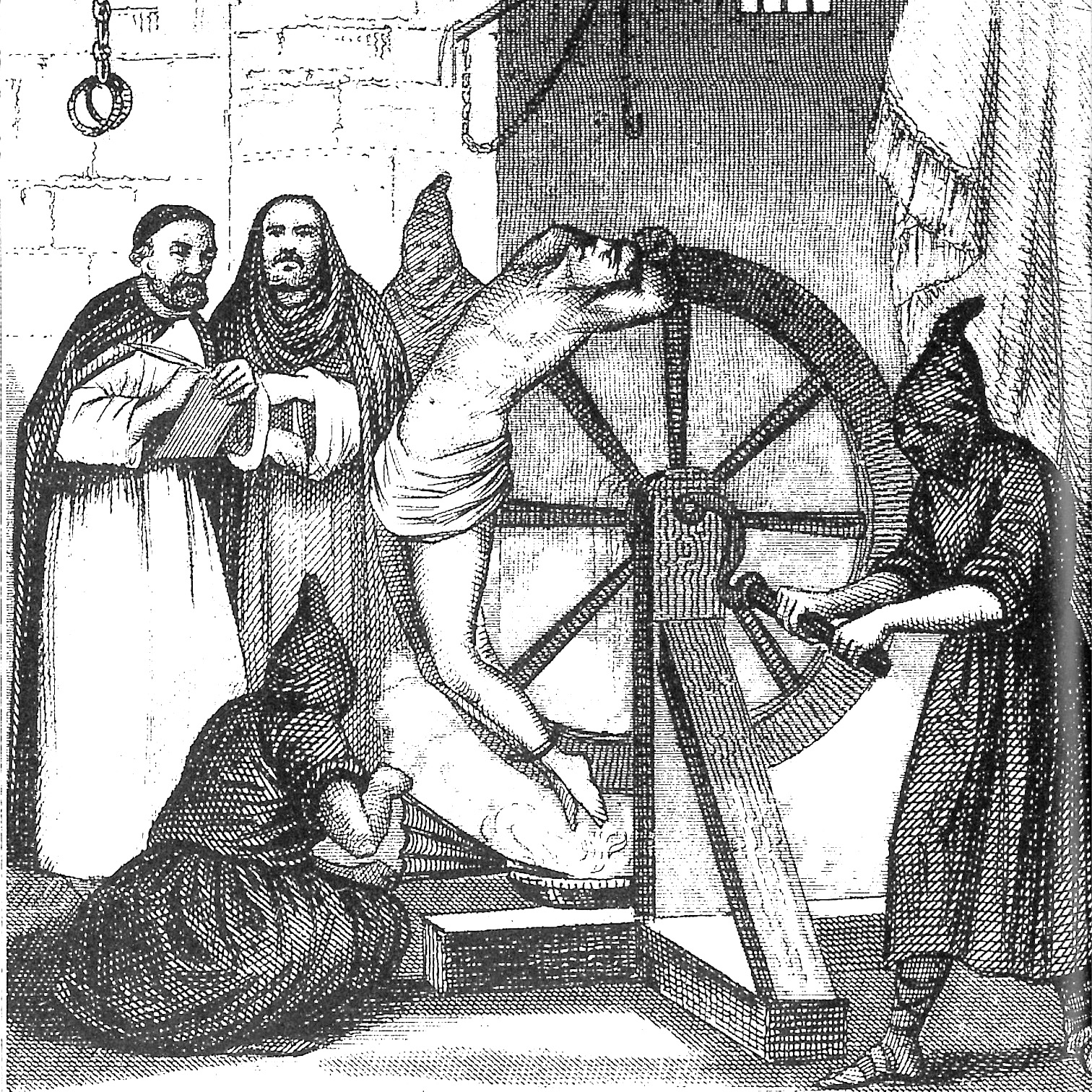
The Board of Patent Inquisitions

Link (pdf of proposed new rules)

Caption: If the Examiner is giving you the run around, you can come to us for relief.

Monday, July 30, 2007

HP exec (the "invent" co.) & Houston Paper not above Downright Lying to Texas Football Fans

According to an opinion written by HP exec Ted Clark:
The last major updating of our patent system was in 1952. Back then, no one had heard of The Beatles and a long-distance telephone call was considered "high-tech." Yet this same system [1952 Patent Act] is expected to perform in today's faster paced, technology-based economy.

The Fourth Estate (newspaper editorials) seems to have been taken over by a Corporate Ministry of Doublespeak Truth right out of 1984. So it is up to the Blogosphere to holler a good ole fashion "foul" when the paper downright lies to its underinformed readers. Democracy can't work if the people are repeatedly lied to.

According to one historical site {IP Mall}, there have been amendments to the 1952 Act every couple of years:

1954
1958
1959
1961
1962
1964
1965
1971
1972
1975
1980
1982
1983
1984 --Hatch Waxman add ons
1986
1988
1990-1994 (every year)
--Of these, the last two were for NAFTA and GATT (20 year term)
1995
1996
1998
1999-- The American Inventor's "Protection" Act, a major set of changes

For more misleading statements to the public, one can go here and see what Mr. Smith Goes to Washington says:

Arguably, it [Patent Reform 2007] represents the biggest change since the 1952 act was written. The subcommittee has undertaken such an initiative because the changes are necessary to bolster the U.S. economy and improve the quality of living for all Americans. The bill will eliminate legal gamesmanship in the current system that rewards lawsuit abuses over creativity. It will enhance the quality of patents and increase public confidence in their integrity. This will help individuals and companies obtain money for research, commercialize their inventions, expand their businesses, create new jobs and offer the American public a dazzling array of products and services that continue to make our country the envy of the world. All businesses, small and large, can benefit. All industries directly or indirectly affected by patents, including finance, high tech and pharmaceuticals, can also profit.

Saturday, July 28, 2007

Reform Rationale Calls for Eradication of Human Race

A few bad apples are reason enough to remove the whole barrel according to certain pest control experts who wish to "reform" the 200 year old American patent system.

AP reporter Erica Werner warns her readers of the patent plague that confronts our nation. In a recent fair and blanched report she opens with the following line of plagiarized rhetoric:

Crustless peanut-butter-and-jelly sandwiches, a way to move sideways on a swing, a technique for exercising cats using a laser pointer - these are among the inventions patented in the United States over the years. Now Congress is trying to cut down on poor-quality or downright ridiculous patents, and at the same time adapt the patent system to a high-tech era in which computers and other electronic devices may contain thousands of patentable parts.

With millions of patents having been served out by the underfunded and overwhelmed US Patent Office, the enviro-friendly daft reporter has "discovered" all on her unbiased own the dastardly few patents that warrant eradication and total makeover of the whole system.

Of course, by that logic, it would make sense to exterminate the whole of the human race. After all, news reporters such as Erica are constantly uncovering examples of unsavory human beings. Does it not make sense to once and for all eliminate those pests as well? They pollute the air and poison the children. They commit crimes and lie, cheat and engage in acts of moral depravity.

And besides, if we leave alive a few independent inventors; why they might multiply and spread their contagious ideas around the whole world. Who wants free thinkers in an age of corporate mind control and global domination?