Saturday, July 2, 2011

One more herring, not red

Link to the engrossed version of HR 1249

Link to judiciary.house.gov page for HR 1249

Some random bits of herring:

‘‘§ 115. Inventor’s oath or declaration
‘‘(b) REQUIRED STATEMENTS.—An oath or declaration under subsection (a) shall contain statements that—
‘‘(2) such individual believes himself or herself to be the original inventor or an original joint inventor of a claimed invention in the application.

‘‘(c) ADDITIONAL REQUIREMENTS.
The Director may specify additional information relating to the inventor and the invention that is required to be included in an oath or declaration under subsection (a).

‘‘(2) COPIES OF OATHS, DECLARATIONS, STATEMENTS, OR ASSIGNMENTS.—
... the Director may require that a copy of the executed oath or declaration, the substitute statement, or the assignment filed in connection with the earlier-filed application be included in the later-filed application.

SEC. 10. FEE SETTING AUTHORITY.
(a) FEE SETTING.—
(1) IN GENERAL.—The Director may set or adjust by rule any fee established, authorized, or charged under title 35, United States Code, or the Trademark Act of 1946 (15 U.S.C. 1051 et seq.), for any services performed by or materials furnished by, the Office, subject to paragraph (2).

‘‘(b) MAINTENANCE FEES.—
‘‘(C) Eleven years and 6 months after grant, $4,110.

SEC. 33. LIMITATION ON ISSUANCE OF PATENTS.
(a) LIMITATION.—Notwithstanding any other provision of law, no patent may issue on a claim directed to or encompassing a human organism.

Passed the House of Representatives June 23, 2011.

Thursday, July 1, 2010

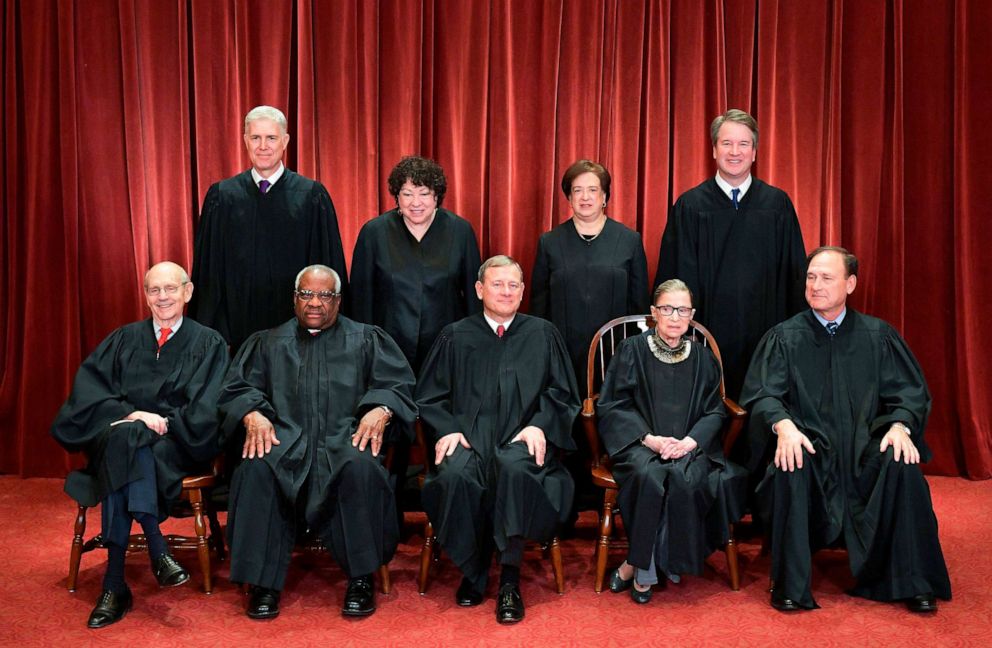
Nine Blind Bilski Justices, None with a stick, None with a Clue

Over at the IP WatchDog site, I posted the below somewhat irreverent proposal:
   
  If I were to draw a picture of the 9 U.S. Supreme Court Justices circling the Bilski v. Kappos elephant, I would ...
 
   
  place each one outside the 3 point basketball circle relative to the elephant and put a Geiger counter or compass in the hand of each blind Justice whereby each senses the “spin” around the Bilski claims but none of them actually touches and “gets it” directly (by hand or even with a blind man's walking stick).

In this hypothesized cartoon, one Justice would be saying, “My Geiger counter says it ‘feels’ that the Bilski elephant is too “abstract”. I say the physical steps in Bilski were never there to begin with and certainly I don’t see them.”

Another would say
, “My sundial is foreshadowed by an ancient sun and indicates that the Founding Fathers would have frowned on this sort of progress. The business of patents is not business –irrespective of whatever the word “business” might mean”.

A third would say, “My MRI spin machine indicates ... (Read more)


Monday, June 28, 2010

MOT is Apple Sauce

Outgoing Supreme Court Justice Stevens failed to garner a majority in Bilski v. Kappos. (Thank goodness.)

Today's decision was instead authored by a Kennedy-led "consensus" majority. The compromise-driven coalition majority clung to a mere 16 pages of veiled revelation so as to not lay bare their internal disagreements and foggy apprehensions about what clueless footholds might lie under the swampy murk of the patent eligibility world.

As usual, lay folk will want to know: What does it (the Bilski v. Kappos decision) mean?

Here are some semi-cryptic answers:
1. MOT has been whipped into apple sauce --still good for the gander, but not gravy for the patent-killing goose
2. The concrete sidewalk on State Street is demolished
3. Opaqueness is the new transparency
4. Bilski is a teacher and his claims "explain", tutor and educate.
5. "Invention" is to be divined through the eyes of the beholding judge/ examiner and not in accordance with claims read as a whole
6. As for Bilski himself and poor Yorick, alas we knew them well but they must hang.

Of course, to "make apple sauce" of something means to mash it up, to run it through the blender so that the original is no longer recognizable.


Bilski aficionados know that "MOT" stands for the Machine-Or-Transformation test, This was the eligibility test put forth by the lower US appeal court, the Federal Circuit. (See In re Bilski (Oct. 30, 2008)) as being the "exclusive" and only test for eligibility of a "process" claim under section 101.

The US Supreme Court has today mashed up the Fed. Cir.'s MOT test such that it is no longer usable for knocking down another's patent or application.

Also, Mott's happens to be a brand name of an apple sauce.

To say that MOT is no longer gravy for the patent-killing goose means that although MOT has been de-fanged as a test for knocking down someone's business/ software patent under 35 USC 101, the other edge of the MOT double edged sword remains sharp and wield-able. Patent owners can still use MOT to validate their patent claims under section 101.

This is good news for those seeking patents for methods of doing business and methods using machines that obey "software" commands.

Opaqueness is the new transparency.
What does that mean?
The US Supreme Court today "affirmed" the Fed. Circuit decision.
But in actuality, they reversed it.
Welcome to the new Mis-Information Age where words mean the opposite of what they say. Alice of the Wonderland Mirror would be right proud. More to follow. ... here

In the mean time if you wish to see what other bloggers are saying about Bilski, here is a link to such other views.

Thursday, November 12, 2009

The Horse Whisperers

What can one say about the 11/9 oral hearings at the US Supreme Court in the matter of Bilski v. Kappos?

Were they just joking or is this the way they actually think? Only time will tell.

Bilski hearing transcript (as text)

Google of Latest blogs re Bilski patent

Friday, September 4, 2009

The 3-liner the USPTO doesn't want you to know about

On rehearing the Board stated that Buff’s wire 48 is a “transverse member” and not a "wire leg", and therefore that it [the member] need not have a displacing offset [as required by the claims]. Mr. Skvorecz states, and we agree, that Buff’s wire 48 is a "leg" of the Buff [prior art] structure. The Board’s contrary statement is unsupported by any evidence. In Re Skvorecz, (Fed. Cir. Sept 3, 2009)

Sunday, December 7, 2008

In re Bilski / Part 2 / The fundamental fundamentals of "fundamental principles"

The In re Bilski majority notes: "Specifically, the [Supreme] Court has held that a claim is not a patent-eligible "process" if it claims [1] "laws of nature, [2] natural phenomena, [or] [3] abstract ideas." ...Such fundamental principles [footnote 5] are "part of the storehouse of knowledge of all men . . . free to all men and reserved exclusively to none." ... ("A principle, in the abstract, is a fundamental truth; an original cause; a motive; these cannot be patented, as no one can claim in either of them an exclusive right.") --quoting Le Roy v. Tatham, 55 U.S. 156 (1852)
One must ask what the urgent need was for the Bilski majority to invent new terminology ("fundamental principle") for covering up and hiding the original triad of:
[1] "laws of nature",
[2] "natural phenomena", [and]
[3] "abstract ideas"?
Read more ...

Saturday, November 1, 2008

In re Bilski: Trick or Treachery?

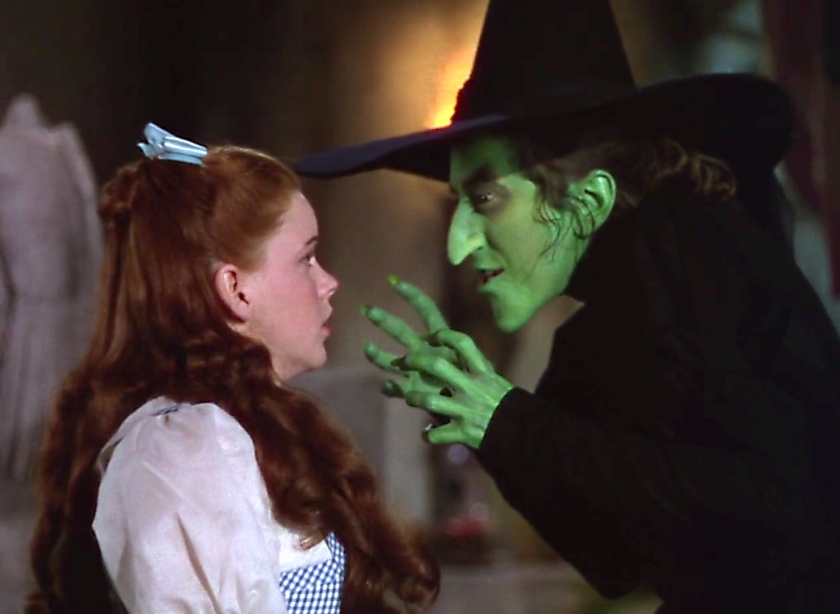
Halloween is a day for costumes.

Halloween is about disguise.


People can't see behind the mask to divine among the wicked and wise.

Read More